Rauh Jewish History Program & Archives, Performance Series “GUT YONTIF: a patchwork holiday experience”
Rip (e) +Weep- One night participatory performance 10/20/24
Ripping our collective grief… nothing is permanent, all we can do is understand and protect our wounds.
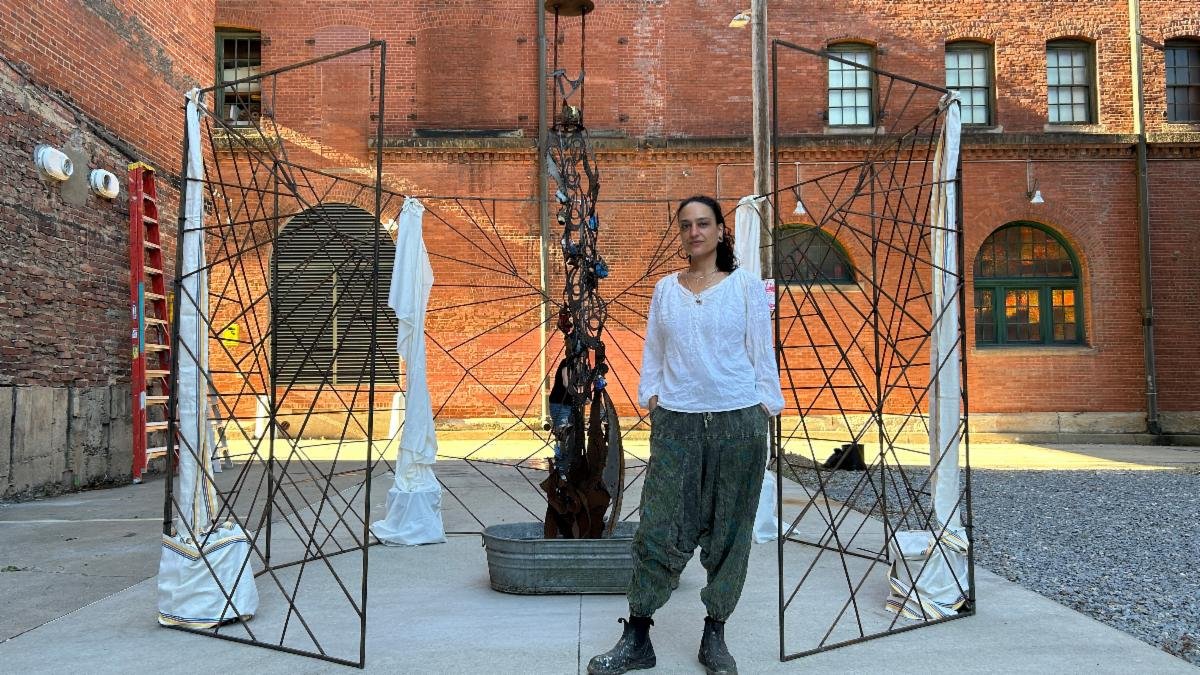
“Ripe Weep” structure Eight 4ft x 8ft Welded Steel rebar frames with glass designed based on Louise Silks' quilt patterns built into Sukkah walls and performance space.
WESA Pittsburgh Interview with Bill O'Driscoll https://www.wesa.fm/arts-sports-culture/2024-10-17/pittsburgh-artists-heinz-history-center-jewish-holidays "For “Gut Yontif,”
Louise Silk: A Patchwork Life - The Gut Yontif Project: Sukkot Written by Eric Lidji
The Torah describes Sukkot as z’man simchateinu: “the time of our rejoicing.” But how hard it can be to rejoice in times of sadness and uncertainty.
In the first of our four-part holiday series “Gut Yontif: A Patchwork Holiday Experience,” sculptor Oreen Cohen found a path to joy by working through her grief over the events of this past year. Reimagining and subverting the symbols of Sukkot, Cohen crafted a powerful performance that was communal, cathartic, and accommodating of many viewpoints and traditions.
The two-hour performance took place outside the Heinz History Center’s Dietrich building at 1231 Penn Ave., protected by mountainous walls on three sides. Guests arrived through gates decorated with billowing silk tapestries by Rosalind Rosabel (the artist behind our upcoming Chanukah program).
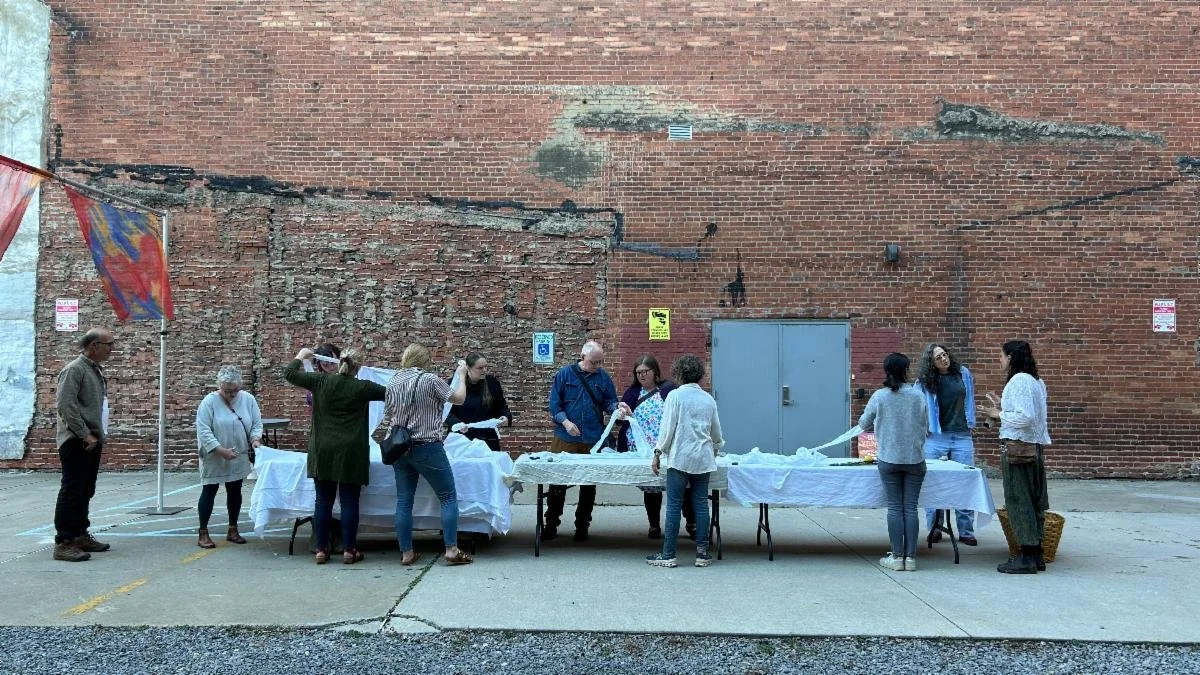
Just beyond these gates were three tables: one where guests ripped white linens into three-inch strips, a second where they tied these strips end-to-end into long cords, and a third where they wrapped the cords into bundles to be placed into a wicker basket on the ground. The basket called to mind the agricultural connections of the holiday. Sukkot was once a harvest festival. After months of planting, fields yielded their final bounty for the year.
The basket was brought to Cohen, who was standing inside an eight-sided sukkah she had welded together from reclaimed rebar. She based the pattern on Louise Silk’s piece “City Quilt I”—the initial piece in Louise’s first one-person show from 1987, an effort to “break the box” of traditional quilting.
In the center of the sukkah, Cohen had made a 10-foot totem of welded metal and luminous colored slag, filled with memorials to the losses of this season.
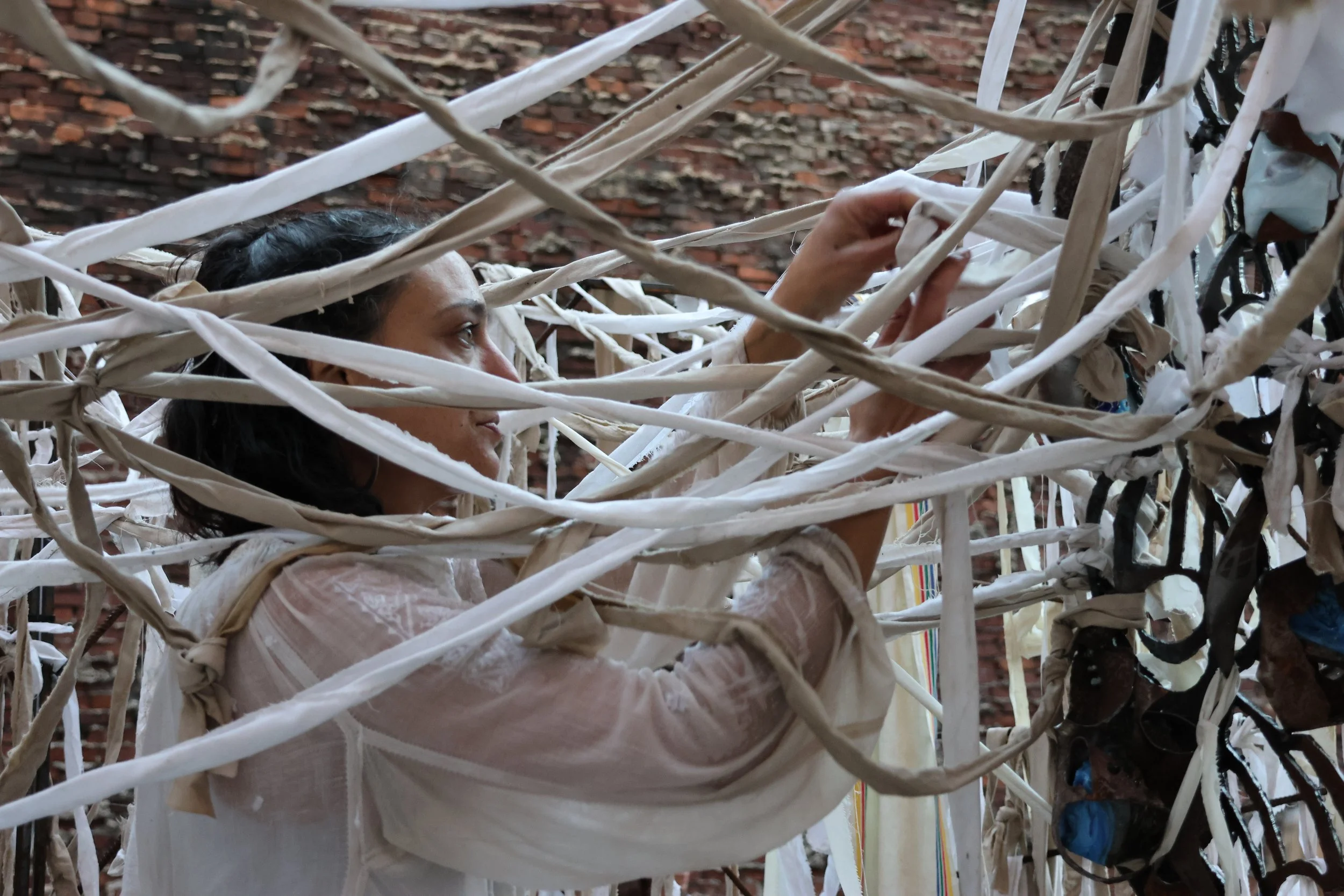
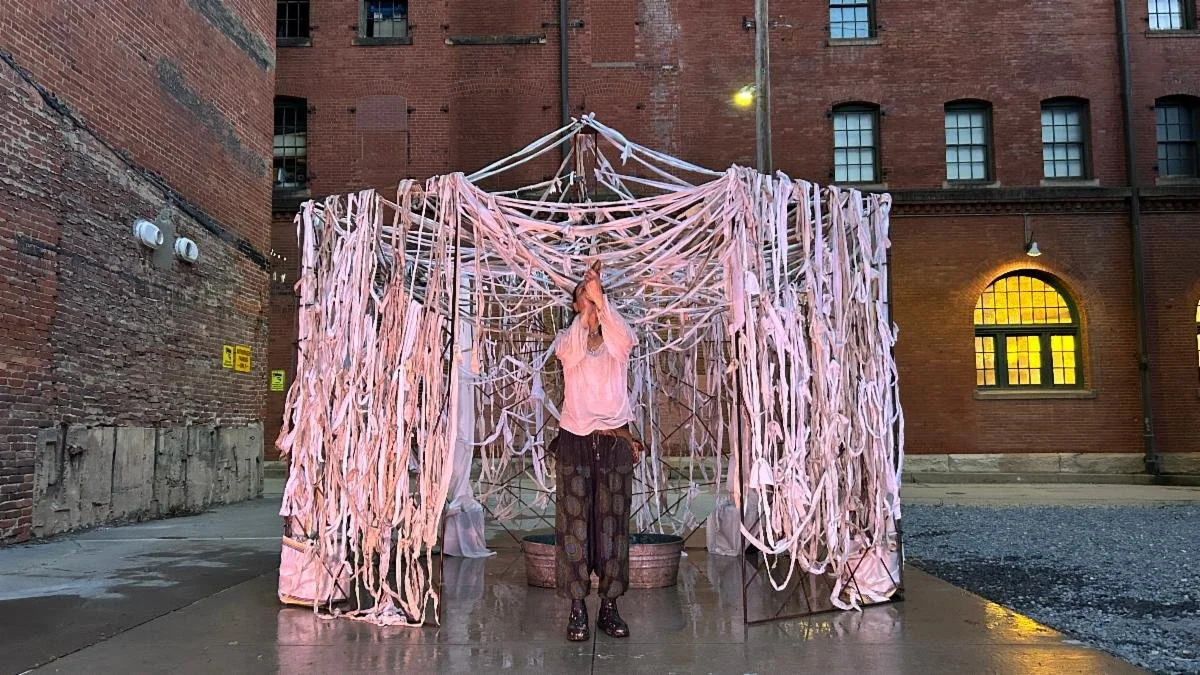
As the sun slowly set over downtown, Cohen soaked the bundles in water, tied them to the totem, and strung the dripping cords over the sukkah. The air filled with the smell of water, reminiscent of healing tears and nourishing rain.
The performance culminated at sunset. Just as daylight faded, small footlights were arranged around the sukkah, making it glow against the oncoming night.
It was magical.